You get home, take off your shoes, and there it is: the damp sock, a cold and clammy foot, and that uncomfortable feeling you know all too well. If your feet sweat a lot, looking for socks for very sweaty feet is one of the first sensible things you can do, because the fabric you wear for eight or ten hours makes a much bigger difference than it seems.
Let's break it down: why it happens to you, what a sock should have to manage it better, and why plain old cotton isn't always the answer you expect.
Why do my feet sweat so much?
Let's start by getting one idea out of your head: sweating through your feet is normal and necessary. The sole of the foot is one of the areas of the body with the most sweat glands per square centimeter1, and their job is exactly that, to cool. The problem arises when that sweat has nowhere to go.
Think of your foot inside your shoe like a greenhouse. Glass everywhere, heat, humidity, and no ventilation. It doesn't matter how much you sweat: if the air doesn't circulate and the moisture doesn't evaporate, it stays condensed inside. That's why some people sweat little and still end up with wet socks, and others sweat a lot and manage it much better: the difference is almost always in the material of the sock and the shoe, not in your glands.
Other factors contribute to this "greenhouse effect": closed rubber-soled shoes, summer heat, long hours standing without taking your shoes off, nerves or stress (emotional sweat goes straight to hands and feet), and socks made of low-quality fibers that retain water instead of letting it escape.
And why do my feet sweat and feel cold at the same time?
This combination baffles many people, and it's more common than it seems. As moisture evaporates, it cools the skin: the same principle why you get out of the pool and sometimes shiver even when it's 85 degrees Fahrenheit outside. If your foot is damp and the circulation in that area isn't the most generous, you have the perfect combo of sweaty and cold feet at the same time 🥶.
If this happens to you daily and is accompanied by other signs (color changes, tingling, icy feet even in summer), talk to your doctor. Here we only talk about comfort and well-being, not diagnoses.
What socks should you wear if your feet sweat?
No sock in the world will make you stop sweating. There is no fabric that turns off sweat glands, and anyone who sells you that is telling you a tall tale. What a good sock does do is manage that moisture, draw it away from the skin, and allow it to evaporate, so your foot doesn't spend the day in a puddle.
For this, the best socks for sweaty feet share three things:
- A fiber that wicks away moisture, not stores it. This is the difference between a towel (absorbs and stays wet) and a technical running shirt (moves sweat outwards and dries).
- Real breathability, so air circulates and moisture has a way to escape.
- A fabric without ridges or thick seams, because every point of friction on a damp foot is a potential blister.
Cotton, synthetic, or technical fiber?
Cotton has a good reputation, and generally deserves it: it's soft, natural, and breathes much better than cheap synthetics. But it has a specific drawback for very sweaty feet, and it's important to know: it can absorb up to 25 times its own weight in water2 and then takes a long time to release it. Translated to your day: in the morning it's perfect, and by mid-afternoon you're wearing a wet sponge stuck to the sole of your foot.
Cheap synthetic fibers are at the other extreme. They neither absorb nor breathe, so sweat stays there, with the heat joining the party.
In the middle are fibers designed precisely for this. Coolmax is a technical fabric designed to transport moisture from the skin to the surface of the sock, where it evaporates, so the foot stays dry for many more hours. And bamboo is in a different league: its fibers have micro-spaces in their structure that help absorb and wick away moisture faster than cotton, it's very soft, and it has natural antibacterial properties that help reduce odor accumulation.
Did you know that most people who say "my feet sweat a lot" simply wear the wrong socks for eight hours? Changing the fiber usually makes a difference on the first day.

Our recommendation for very sweaty feet
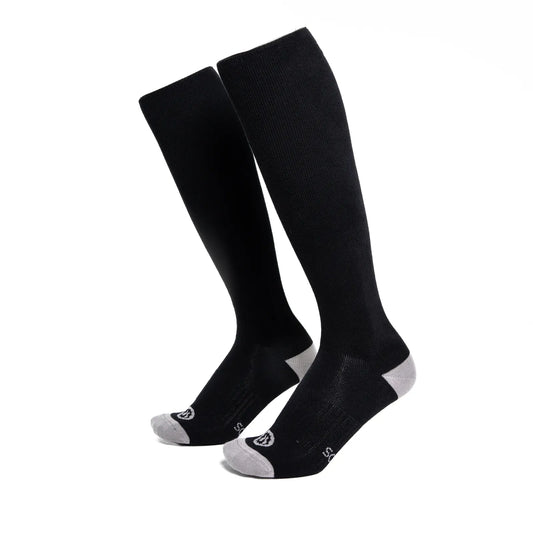
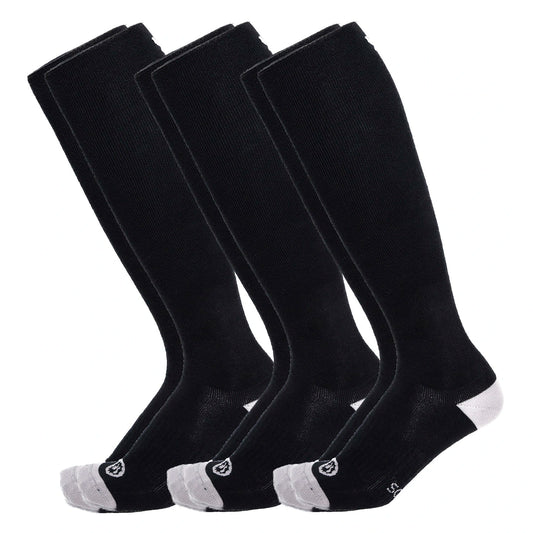
If sweat is your issue, the model we ask you to try first is the Fresh, made with Coolmax fabric. It's the best at wicking moisture among all of ours, the one feet appreciate the most in summer and during any job requiring long hours in shoes.
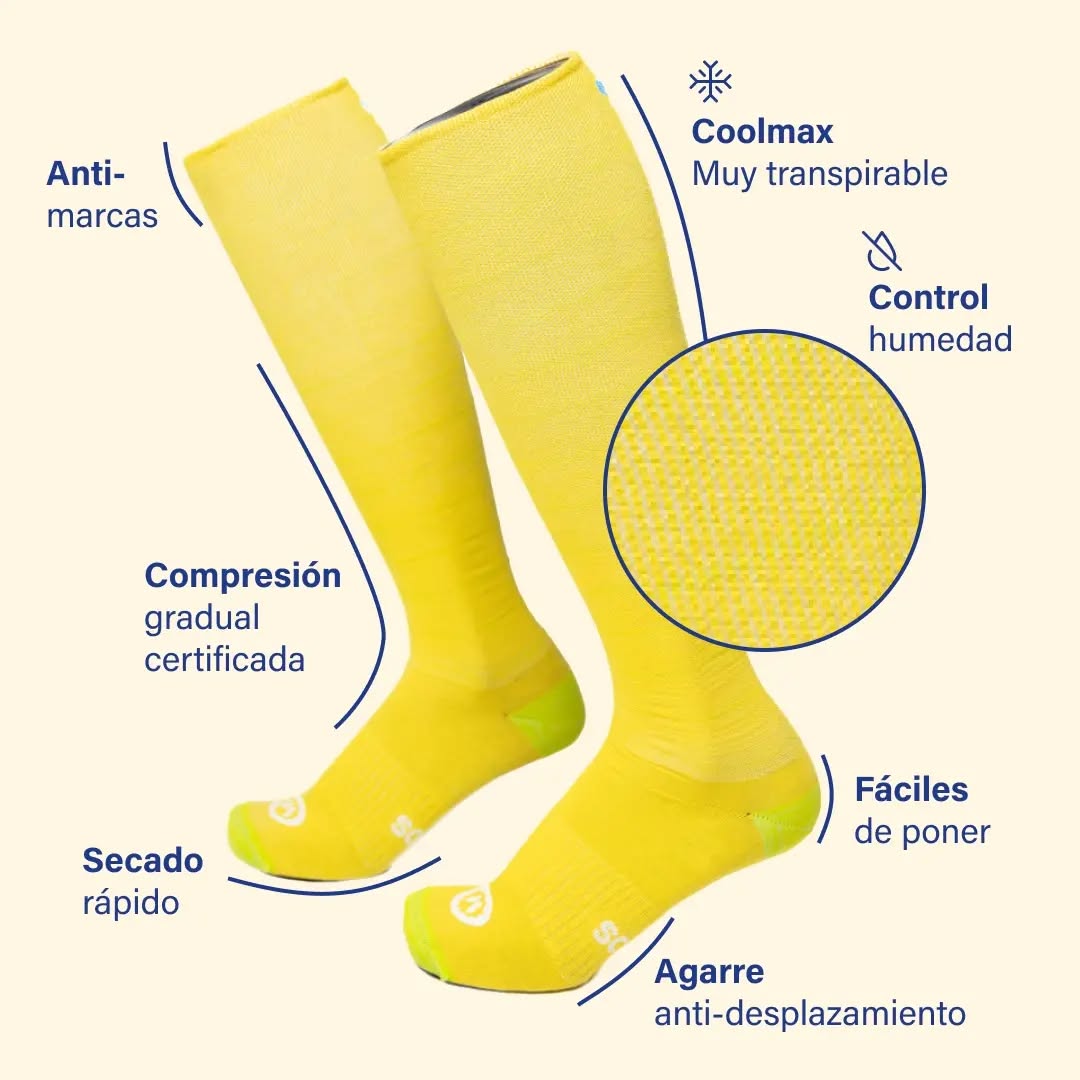
☀️ Fresh: the best for sweat management
Coolmax fabric, designed to draw moisture away from the skin instead of retaining it, with light gradual compression (14-17 mmHg verified in an external lab). Feet stay dry for many more hours, and legs feel lighter.
- Maximum breathability: wicks moisture outwards
- Seamless with no ridges, less friction on damp feet
- OEKO-TEX certified and made in Spain
For hot days and long shifts with shoes on.
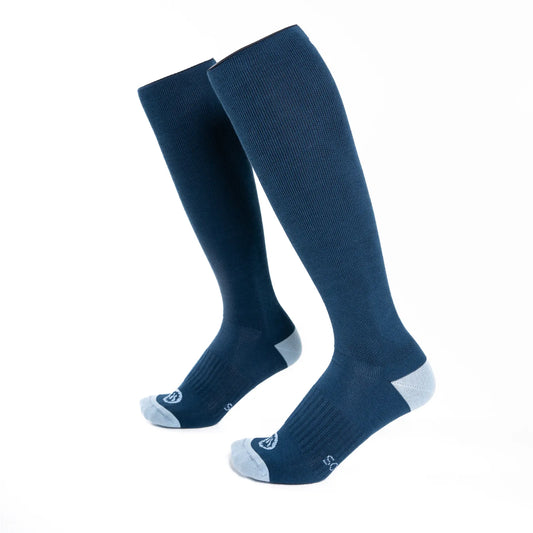
If in addition to sweat, you're concerned about odor, or if your skin irritates easily, bamboo is the best option.
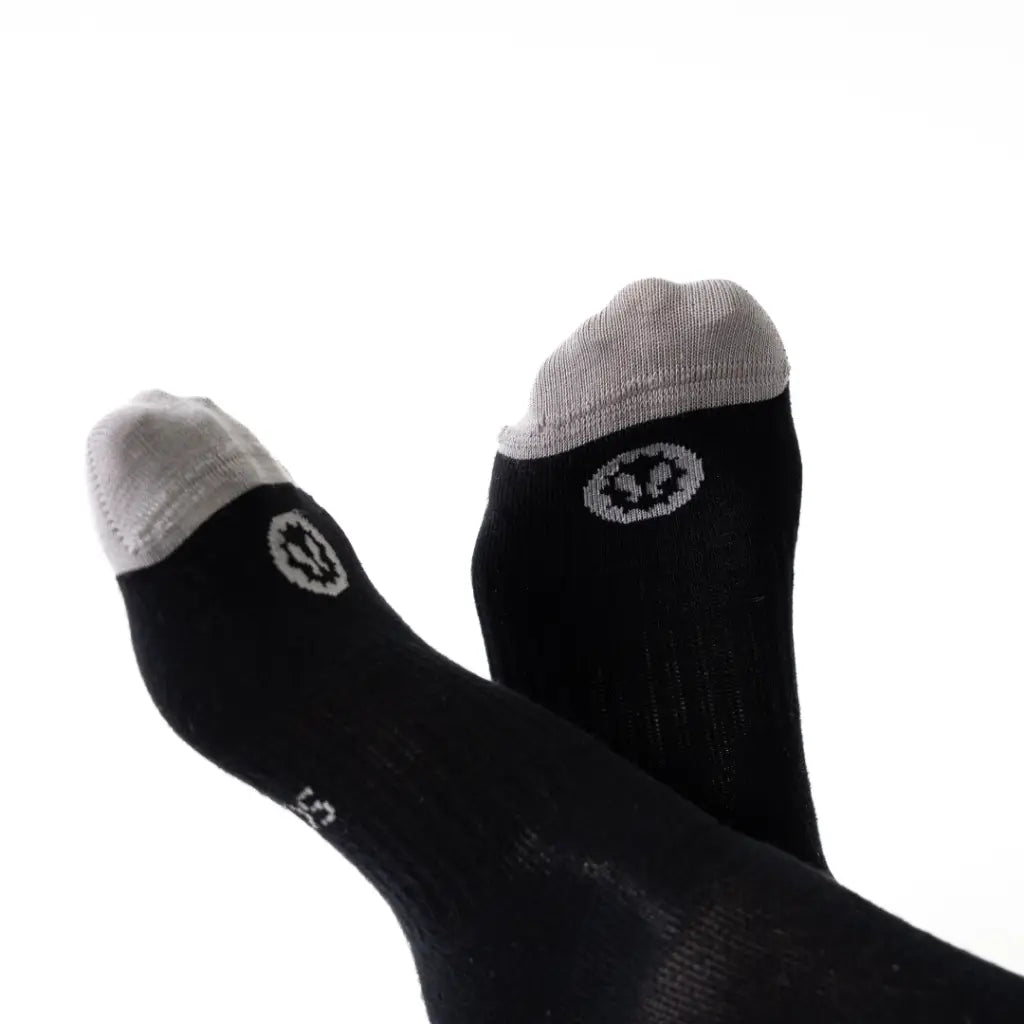
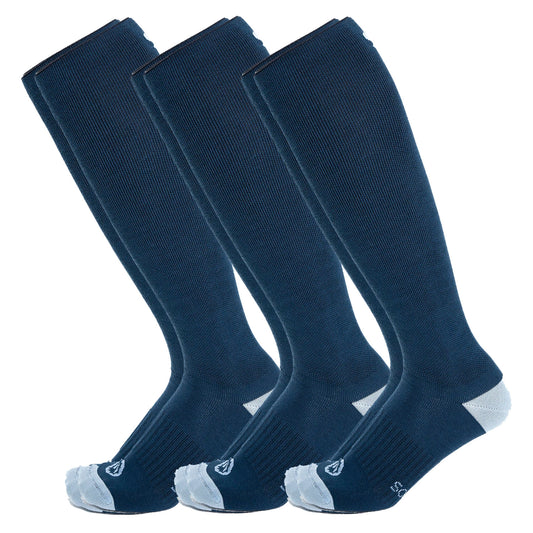
🌿 Nature Bamboo: breathable and odor-reducing
Bamboo fiber, with micro-spaces in its structure that help absorb and wick away moisture faster than cotton, hypoallergenic and with natural antibacterial properties that help reduce foot odor at the end of the day. Same light gradual compression.
A note to avoid mistakes depending on your plans: bamboo is wonderful for daily wear, the office, or cycling (where you sweat a lot but don't walk). For hiking and mountaineering, however, it is not suitable because it does not have a reinforced sole. For those activities, we always recommend the Dynamic, which dries quickly and has a 100% reinforced sole to help prevent blisters on long routes.
One moment: sweat is from the foot, compression is for the leg
It's worth clarifying this, as it's often confused. All our socks have light gradual compression, but that compression works on the leg: it's tighter at the ankle and gradually loosens as it goes up, to aid venous return and prevent your legs from feeling heavy. It doesn't compress the foot at all; it always remains loose, no matter what size you choose.
So here you have two different things working at once: the material deals with foot sweat, and the compression deals with the feeling of heaviness in the leg. That's why, when choosing a size, look at your calf measurement and not your shoe size (many people rush and make a mistake right there). You can find everything in the Calcetinos size guide.
And since we're talking about details: you might notice the top part feels a bit loose. That's on purpose. Our socks don't have a tight elastic band at the top, to avoid cutting off circulation or marking your leg. A slight mark is normal, like with any sock; what shouldn't happen is a deep groove, and if it does, it's usually a sizing issue.
Is sweat what makes feet smell?
Not directly, although they always go hand in hand: freshly secreted sweat is practically odorless. What smells is the party that ensues: humidity, heat, and lack of air create the ideal environment for the bacteria that normally live on the skin, and it's these bacteria that, by breaking down sweat, generate that characteristic odor.
Therefore, the order of operations is self-explanatory: the sooner moisture leaves the foot, the less time those bacteria have to work. That's where a breathable fabric makes a difference, and that's why bamboo, with its natural antibacterial properties, is usually the one that gives the best results when odor is the main concern.

Daily tips if your feet sweat a lot
The sock is half the battle. The other half involves small habits that make a bigger difference than they seem:
- Rotate your footwear. A shoe needs between 24 and 48 hours to dry completely inside, so wearing the same pair daily means starting the day with accumulated moisture.
- Choose breathable shoes. Leather, fabric, or mesh always win over plastic soles and linings, especially in summer.
- Change your socks halfway through the day if you work long hours on your feet. Carrying a spare pair in your bag is the simplest and most effective tip on this list.
- Dry your feet thoroughly after showering, taking your time and especially between your toes. That's where moisture tends to linger longest.
- Let your feet air out when you're at home. Nothing complicated: just taking off your shoes for a while makes a big difference.
If you work on your feet for many hours, the combination of sweat and tired legs is almost a complete package. We cover this in more detail in socks for working on your feet for many hours, because both issues come together there.
When should you see a professional?
Almost everything we've discussed can be resolved with materials and habits. But there are signs that go beyond that and should be evaluated by a doctor or podiatrist:
- Very abundant and constant sweating, even at rest or in winter (known as hyperhidrosis, excessive sweating that has its own approaches).
- Whitish, softened, or "pitted" skin on the sole and between the toes.
- Persistent itching, flaking, cracks, or bad odor that doesn't go away no matter how much you change socks and wash your feet, which may indicate a fungal infection.
- Any wound that doesn't heal well, especially if you have diagnosed diabetes or circulatory problems.
Our socks are a product for daily well-being and comfort: they help keep feet drier and legs lighter, and they are not, nor do they pretend to be, a treatment for any of the above.
This content is for informational purposes only and does not substitute the assessment of a healthcare professional. If you notice excessive sweating, skin lesions, or recurring discomfort, consult your doctor or podiatrist.
Dry feet, long day
Sweaty feet can't be fixed, nor do they need to be: that's just what happens when you have a body that works. What can be fixed is spending the day with wet socks, and for that, you just need to choose the right fiber, let your feet breathe, and change a couple of habits...
Remember that not all compression socks are Calcetinos... or the same 😉
Sources
- The plantar area has over 250,000 sweat glands. Source: Podoactiva
- Cotton can absorb up to 25 times its own weight in water. Source: Barnhardt Cotton