You take off your typical socks at the end of the day and your skin gives you trouble: your feet itch, your legs feel tight, or you have those marks from the elastic. If this happens to you often, you are not unusual or overly sensitive. Socks for sensitive skin exist precisely because many people experience the same thing, and it almost always has to do with what you're wearing, not with you.
The good news is that it can be fixed without sacrificing comfort. In this post, we'll tell you why your feet or legs itch with socks, how to distinguish an itch that is merely an annoyance from one that is actually a good sign, and what to look for when choosing a sock that your skin will truly appreciate.
Why do your feet or legs itch with socks?
Think of that wool sweater that itches just by looking at it. Your skin doesn't react because you're overreacting: it reacts because there's something physically irritating it. Something similar happens with socks, and it's usually due to a combination of these things:
- The material. Many synthetic fibers are not very breathable and retain heat and moisture, and that mixture of sweat and friction is a magnet for itching.
- Dyes and chemical finishes. Some socks are made with substances that sensitive skin does not tolerate well, and that's when the typical reaction appears on the toes or instep.
- Trapped sweat.When the foot doesn't breathe, moisture sticks to the skin and softens it, and softened skin irritates easily.
Did you know that many of the itches you notice "when you take off your socks" are not from your skin, but from the microclimate that has formed inside for hours? Hot feet, little air, and continuous friction: the perfect cocktail.

Hold on: not all itching is bad
Here, we need to separate two things that are often confused, because they have nothing to do with each other.
One thing is itching due to sensitive skin or the material, which is an annoyance and needs to be resolved (that's what this post is about). And another very different thing is that tingling or slight itch that some people feel in their leg just after putting on a compression sock. The latter is not bad, it's quite the opposite: it's a sign that the blood is starting to move and that the compression is doing its job. If you notice your leg "waking up" a bit when you put it on and the sensation passes quickly, don't worry: that's well-being in motion, not an alarm.
The itching that needs to be addressed is the other kind: the one that appears due to friction, sweat, or a material that your skin doesn't tolerate well, and that doesn't go away, but gets worse the longer it lasts.
Is it your skin or is it the sock?
If the irritation itch appears only with certain socks and disappears with others, the fabric is the culprit. If, on the other hand, you have inherently reactive skin (what is known as atopic skin, which easily gets irritated), the sock is not the cause, but it can be the trigger that worsens it.
In the latter case, choosing the right material helps a lot, but if you notice frequent flare-ups, persistent redness, or a reaction that worsens, it's wise to consult your doctor or dermatologist. Comfortable socks help, but they don't replace a professional when skin needs monitoring.
What to look for in a sock if you have sensitive skin
You don't need to be a textile expert. Just paying attention to a few things will be enough:
- Natural and breathable fibers. Your foot needs to breathe so that moisture doesn't get trapped. Bamboo and combed cotton easily beat 100% synthetic fibers in this regard.
- OEKO-TEX Standard 100 certified.This is the easiest way to know that the fabric is free of harmful substances for the skin. All Calcetinos socks have it, and for sensitive skin, that's not a minor detail: it's one of the first things to look for.
- Seamless construction. The less raised seams the foot and leg feel, the fewer friction points. Here, Calcetinos makes a decision that goes against the current: it does not have designs or patterns with raised seams. Many brands boast very modern designs, but these seams press at specific points and spoil gradual compression. The design of Calcetinos is intentional, to respect compression and not bother the skin. It is not a lack of originality, but a technical priority.
- The top elastic should not constrict. And here comes another deliberate design: Calcetinos socks do not have a tight elastic band at the top. This is intentional, to avoid cutting off circulation or marking the leg. That's why sometimes the top part feels a little loose or you notice it "slips down" slightly. It's not a defect: it's precisely what prevents the elastic from hurting you hour after hour. Other brands use tight elastic; we don't.
What about the marks left by the elastic?
It's normal for the top part to leave a small mark when you take them off, just like with any sock in the world. What's not normal is a deep mark, as if you'd had a tourniquet. If it looks like that, the size is almost certainly incorrect.
And pay attention to how you choose the size, because many people rush and only look at their shoe size. The foot is not what matters: the important thing is the leg measurement, because that's where the compression needs to apply gradual pressure (more at the ankle, less as it goes up). In fact, the foot doesn't compress at all; it always remains loose, no matter what size you choose. If you have doubts, it's best to check the Calcetinos size guide before ordering.
Cotton or bamboo for sensitive skin?
Both are good, and the choice depends a bit on you. Combed cotton is soft, noble, and classic, ideal if you're looking for everyday comfort. Bamboo goes a step further for more reactive skin: it's naturally hypoallergenic, up to 50% more breathable than cotton and has natural antibacterial properties, which helps keep the foot drier and with less odor. If your skin complains about everything, bamboo is usually the safest bet.
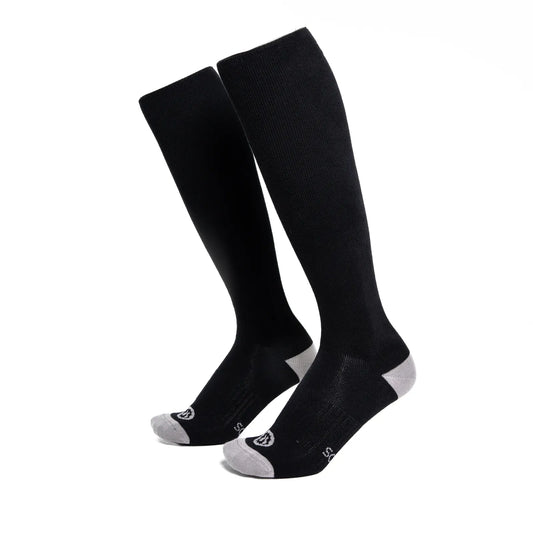
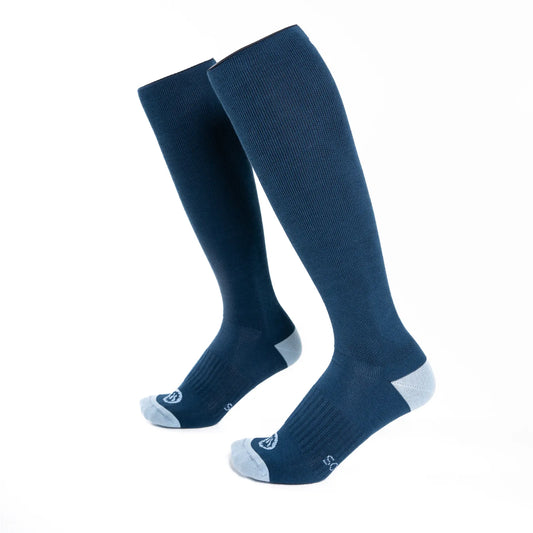
🌿 Nature Bamboo: the gentlest option for reactive skin
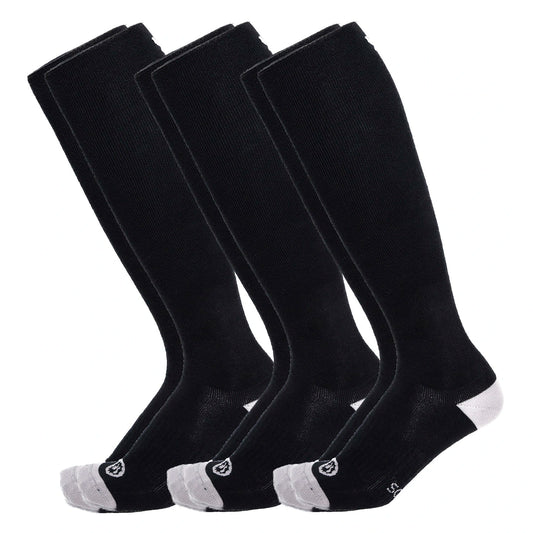
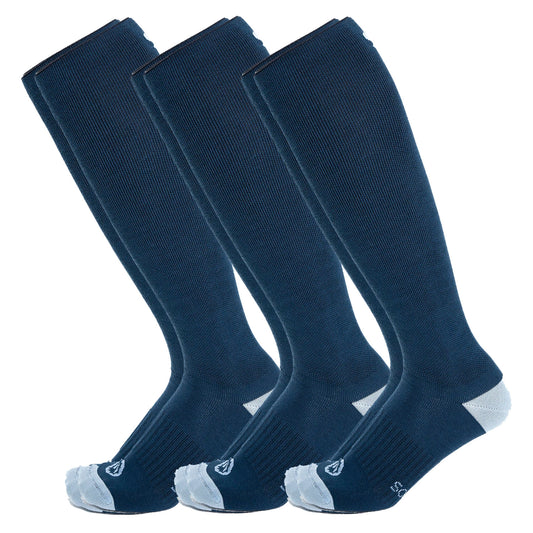
Naturally hypoallergenic, breathable, and antibacterial bamboo fiber, with light gradual compression (14-17 mmHg verified) and OEKO-TEX certification. For skin that irritates easily.

- Hypoallergenic and soft to the touch
- Up to 50% more breathable than cotton
- OEKO-TEX certified and made in Spain
Natural, breathable fiber, free of harmful substances.
🧦 Basic cotton: classic everyday comfort
Soft and noble combed cotton, with the same light gradual compression and OEKO-TEX certification. The classic choice for those who prefer cotton without sacrificing a well-made fabric.

A useful clarification, so you don't make a mistake depending on your plans. For daily use or cycling (where you sweat a lot but don't walk), bamboo is ideal for its breathability. But if you're going hiking, mountaineering, or trekking, bamboo is not the most suitable: it doesn't have a reinforced sole. For that, there's the Dynamic, with a 100% reinforced sole and a quick-drying material to help prevent blisters. We always recommend it for long walks.

And if the problem isn't so much the material as putting them on without struggling (common when skin is irritated and you don't want to rub too much), the stocking donner helps you put them on in seconds, without forcing or rubbing.

Daily tips for sensitive skin
Choosing the right sock is half the battle. The other half are a couple of simple habits:
- Change socks daily and whenever your feet feel damp. Accumulated moisture is what irritates the most.
- Wash them without aggressive fabric softener. Fabric softener leaves residues that sensitive skin notices, so a gentle wash and thorough rinse are better.
- Dry your feet well before putting them on, especially between your toes.
- Check the size by looking at your leg, not just your foot. If it leaves a deep mark or feels too tight at the top, it's not your skin: it's that you need a different size.
When to consult a professional
If, after changing materials and following these habits, you still experience intense itching, persistent redness, blisters, or a recurring and worsening reaction, it's time to see a doctor or dermatologist. There might be contact dermatitis, atopic skin that needs specific care, or a specific allergy to some component, and a professional can evaluate that.
Socks for sensitive skin help you avoid triggers and stay comfortable in your daily life, but they are not a treatment and do not replace a diagnosis.
This content is for informational purposes only and does not replace the assessment of a healthcare professional. If you experience frequent itching, skin reactions, or recurring discomfort, consult your doctor or dermatologist.
Comfortable feet, without skin complaints
Just because we've been wearing socks our whole lives doesn't mean any sock works for any skin. If yours is sensitive, you have the right to comfortable, dry, and itch-free feet: you just need to choose natural fibers, certified fabrics, and a size you don't even notice.
Remember that not all compression socks are Calcetinos... or the same 😉