You put your foot on the floor when you get up and something in your heel protests. A dry, sharp pain, right on the inside of your heel, that makes you tiptoe the first few meters to the bathroom. After five minutes, it eases. And in the afternoon, after standing for a while, it returns.
If this sounds familiar, it's very likely we're talking about plantar fasciitis. It affects about 10% of people at some point in their lives1, so you're in good company.
Let's see what's going on down there, what soothes the daily pain, and what role a sock plays in all this. With a warning upfront, so as not to waste time: a sock does not cure fasciitis. But there's a difference between one that helps and one that hinders.
Where exactly does plantar fasciitis hurt?
The plantar fascia is a band of fibrous tissue that runs from the heel to the base of the toes, on the bottom of the foot. It acts like a bowstring: it keeps the arch of the foot taut and returns some of the energy with each step.
When this "bowstring" is overloaded, it becomes irritated right at the point where it anchors to the heel bone. That's why the pain of fasciitis is usually pinpointed with a finger, on the inner side of the heel, and not spread across the entire sole. If the pain is in the front area, under the toes, we are probably talking about something else.
The tell-tale detail is the timing. It hurts especially with the first steps of the day, or when you get up after sitting for a long time1. While you sleep, the fascia shortens and becomes relaxed, and the first weight-bearing step stretches it suddenly.

Why did you get it?
There's almost never a single cause. Instead, there's a combination of things that have been pulling on the same string for months:
- Many hours standing on hard surfaces. Hospitality, healthcare, retail, industry, hairdressing: the foot doesn't rest, and neither does the fascia.
- Repeated impact. Running, dancing, or any sport with jumping concentrates load on the sole again and again2.
- The weight the foot bears. More pounds on the same band of tissue means more tension with each step2.
- Worn or unsupportive footwear. Old shoes and flat soles leave the arch of the foot without any support2.
- An abrupt change in footwear. Going from closed-toe shoes to flat sandals overnight also counts: the foot doesn't have time to adapt.
Age also plays a role, as incidence increases with years1, and the type of foot itself…
What alleviates the pain?
Stretching, which yields the best results
If you're only going to do one thing, make it this. Stretching your calves and fascia is the most effective way to relieve pain2, and there's a specific stretch for the fascia that was studied with chronic heel pain patients: after two years, 92% reported satisfaction with the protocol's results3.
It's done in a chair, and it has a huge advantage: you can do it before putting your foot on the floor in the morning.
- Sit down and cross the painful foot over the opposite knee.
- With one hand, pull your toes back towards your shin until you feel tension in the sole.
- With your other hand, feel your sole: you should feel the fascia as a taut cord under the skin. If you don't feel it, you're not stretching what you think you are.
- Hold for about 10 seconds and release. Ten repetitions, three times a day.
The first set, before putting your foot down. It makes a significant difference to those first steps.
If you prefer to see it done rather than read about it, physiotherapist Marcos Sacristán explains it in two and a half minutes, along with four other exercises that fit well into the same routine:
Cold or heat for plantar fasciitis?
At the end of the day, when the sole feels hot and burning, cold is the most helpful remedy: a small frozen water bottle rolled under the foot for ten or fifteen minutes. It has a double advantage, as it massages and cools at the same time.
Heat works better at the other time, before moving, so that the tissue is less stiff for stretching. Neither of these alone resolves fasciitis. They accompany the stretching, and that's where they stay.
Is it good to walk with plantar fasciitis?
Yes, with nuances. Walking at a comfortable pace with supportive footwear doesn't worsen the condition, and prevents the foot from stiffening up from inactivity.
What you should avoid while it hurts is walking around the house barefoot, which is precisely the scenario where the fascia works on a hard floor with no cushioning: standing on hard surfaces and wearing worn or unsupportive shoes are among the factors that worsen the situation2. A house slipper with a real sole and some arch support does more than it seems.
And the beach, which is a frequently asked question: soft sand forces the fascia to work with every step, without the support of footwear. If you are in a painful phase, it's best to save it for later.

So, what's a sock doing in all this?
Here we need to be direct, because there are a lot of easy promises online about this topic.
What has been most studied in plantar fasciitis is what goes under the foot, not what covers it. In a randomized trial with custom orthotics, the group that used them experienced improved first-step pain compared to those who only got new shoes4. A sock doesn't play in that league, and anyone who tells you a sock cures fasciitis is selling you smoke.
That said, the sock isn't irrelevant either. It's the layer that's against your sole twelve or fourteen hours a day, and there are things that add and things that subtract:
- Cushioning and friction. A thin, slippery sock lets the foot slide around inside the shoe, and constant rubbing on an already irritated sole doesn't help.
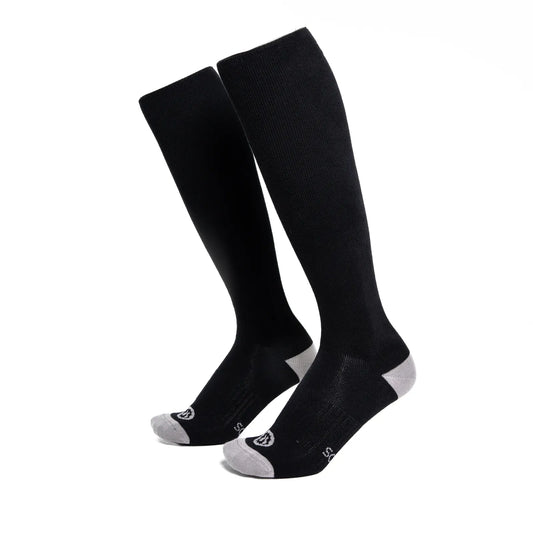
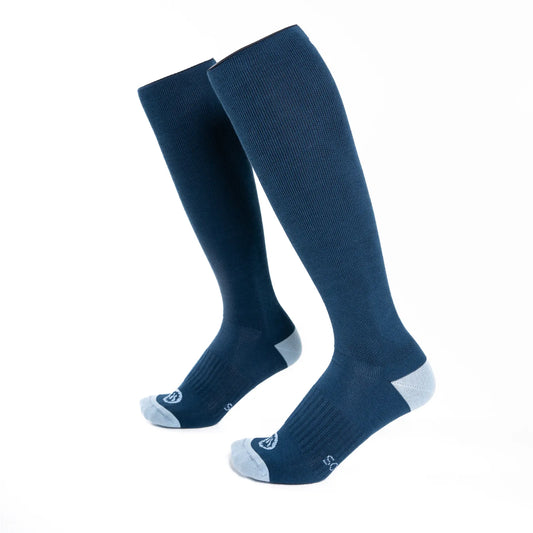
- Seams and raised patterns. A thick seam crossing the sole or heel becomes a permanent pressure point right where it already hurts. That's why Calcetinos are so sober in design: embossed patterns create pressure at specific points and spoil gradual compression, so the design is deliberately plain.
- Material and temperature. The sole of the foot is one of the sweatiest areas of the body. A warm, damp foot irritates more quickly, and the skin of a painful area appreciates any respite.
- Light gradual compression. With this, we need to be very precise about what it does and doesn't do: it doesn't act on the fascia. It acts on the leg, on that heaviness from standing all day, which is very often the context in which fasciitis appears.

Look at the drawing: the compression works on the leg and loosens upwards, and it doesn't constrict the foot at any point. If you spend the day on your feet, that leg heaviness usually comes in the same package as heel pain, and that's where you find the socks designed for working on your feet for long hours.
Let it be absolutely clear, because this is the line Calcetinos does not cross: a light graduated compression sock is a wellness garment, not a treatment. If you have diagnosed fasciitis, your podiatrist sets the plan (and if you don't have it diagnosed and the pain has been with you for weeks, that's exactly the next step).
What to look for in a sock if your sole hurts?
- Flat or seamless seams on the sole. This is the first thing you'll notice, for better or worse.
- Soft, breathable fabric. Bamboo and combed cotton perform well here; cheap synthetic fibers breathe poorly and chafe more than they seem.
- No tight elastic band at the top. A slight mark when you take it off is normal, as with any sock. A deep, constricting mark almost always indicates the wrong size. In Calcetinos, the top part is deliberately loose, to avoid cutting off circulation or marking the leg: if you notice it feels a bit loose, that's by design.
- Size by leg, not by foot. This is the most common mistake with compression hosiery: many people only look at their shoe size. Measurements are in the size guide.
- Light and verified compression, if you're going for a compression sock. The manufacturer should state the mmHg and who measured it. If that's not listed anywhere, you have your answer.
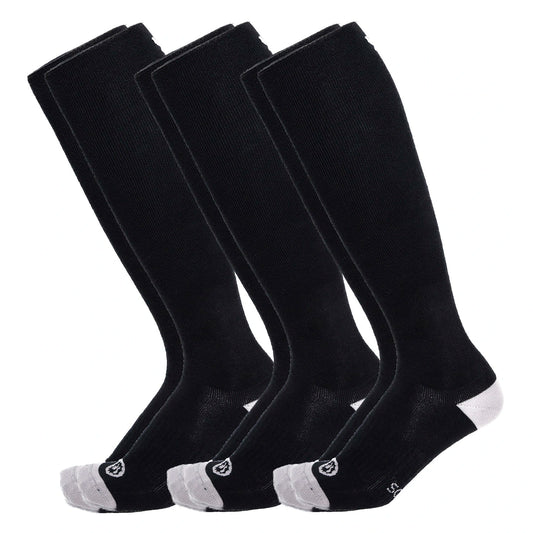
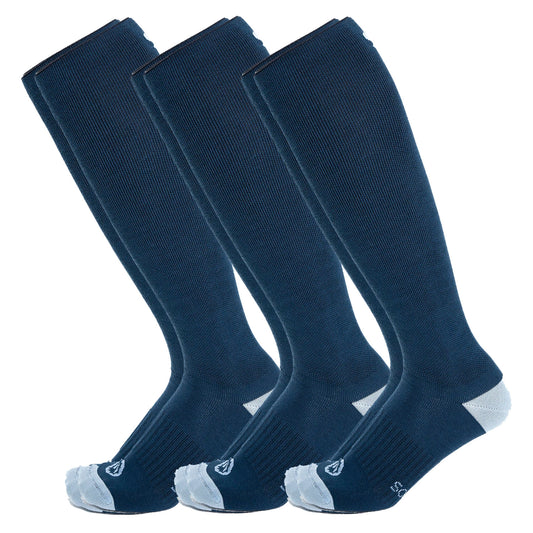
For everyday use, the combed cotton of the Basic is more than sufficient. And if you have sensitive skin, or your sole is so irritated that even the sheet bothers it, bamboo is the softest thing you can put on it.
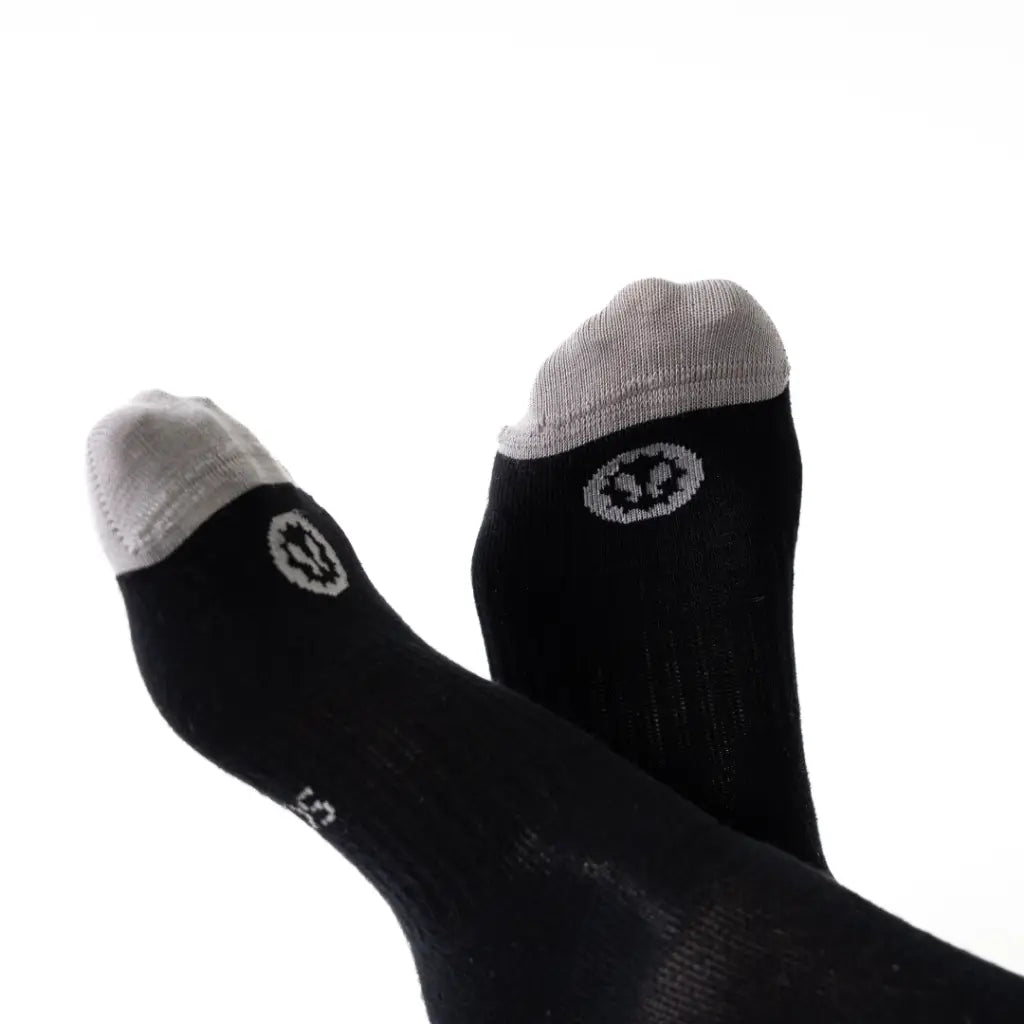
🌿 Nature Bamboo: the softest thing you can put on a painful sole
Bamboo fiber, breathable and pleasant to the touch, with light graduated compression of 14 to 17 mmHg tested in an external laboratory. For the daily life of those who spend many hours on their feet and come home with heavy legs.
- Bamboo fiber, soft and hypoallergenic
- Verified light gradual compression, no tight elastic band at the top
- OEKO-TEX Standard 100 certified and manufactured in Spain
Wellness garment with light compression: supports your day, does not replace your podiatrist.
And is a night sock for fasciitis the same thing?
No, and it's easy to confuse them.
What is sold as a night sock or night splint for fasciitis looks much more like a rigid ankle brace than a sock. It keeps the foot pulled upwards throughout the night, so that the fascia doesn't shorten while you sleep and the first step in the morning hurts less, and it is used under professional guidance.
A light graduated compression sock does not do that, nor is it intended to. They are two different things, for two different moments.
What if I go on long hikes or go running?
Repeated impact is one of the most common factors in fasciitis2, so here what matters most is footwear and progression: don't increase mileage suddenly, and replace your shoes before the sole is as smooth as a mirror.
In socks, the priority changes. Beyond softness, support, reinforced sole, and quick-drying fabric are paramount, because a tight boot plus a damp foot plus many miles is a recipe for blisters, and a blister on an already painful sole means a lost day. Therefore, for hiking, trekking, and long walks, we recommend the Dynamic: it has a 100% reinforced sole, which is exactly what a foot that's going to cover many miles needs.

🏃 Dynamic: reinforced sole for miles
Polyamide with 100% reinforced sole, recommended for hiking, mountaineering, and long walks: supports the foot inside the boot, dries quickly, and helps prevent blisters, with the same light gradual compression of 14 to 17 mmHg as the rest of the family.

How long does it take for plantar fasciitis to go away?
Longer than you'd like and less than you fear. The good news is that the vast majority resolve without surgery: conservative treatment works in 70-80% of cases1, and more than 90% of people improve within ten months of starting simple measures2.
Ten months sounds like an eternity, I know. But the severe pain of the first few weeks doesn't last ten months: what lingers is the tail end, that mild discomfort that appears only some days and gradually becomes more spaced out.
Make an appointment with a podiatrist or your doctor if the pain doesn't ease in a few weeks, if it forces you to change your gait, or if it's preventing you from working. The sooner it's caught, the shorter the story usually is.
Disclaimer: informational content, does not replace the assessment of a healthcare professional.
So, do we recommend Calcetinos if you have plantar fasciitis?
Yes, but it's important to state for what purpose. Not as a treatment, because they are not: the fascia recovers with stretches, with supportive footwear, and with whatever your podiatrist indicates, and a sock doesn't decide anything there.
What we do decide is what happens between your foot and your shoe for the next twelve hours, and for an irritated sole, that matters:
- No raised seams creating pressure points where it already hurts, because Calcetinos' sober design is a technical decision, not a lack of ideas.
- Soft and breathable fabrics: bamboo if you have sensitive skin, combed cotton for everyday use, polyamide with a reinforced sole if you cover many miles.
- No tight elastic band at the top, to avoid constricting a leg that has probably been on its feet since seven in the morning.
- Light graduated compression of 14 to 17 mmHg, tested in an external laboratory, which doesn't affect the fascia but does alleviate that leg heaviness that almost always comes in the same package.
None of this will heal your heel. All of this ensures it doesn't get worse while it heals. And remember that not all compression socks are Calcetinos... or equal 😉
Sources
- Consejo General de Colegios Oficiales de Podólogos (CGCOP). Fascitis plantar. Available at: cgcop.es/fascitis-plantar
- American Academy of Orthopaedic Surgeons (OrthoInfo). Plantar Fasciitis and Bone Spurs. Available at: orthoinfo.org
- DiGiovanni BF, Nawoczenski DA, Malay DP, et al. Plantar fascia-specific stretching exercise improves outcomes in patients with chronic plantar fasciitis. A prospective clinical trial with two-year follow-up. J Bone Joint Surg Am. 2006;88(8):1775-1781. Available at: pubmed.ncbi.nlm.nih.gov/16882901
- Bishop C, Thewlis D, Hillier S. Custom foot orthoses improve first-step pain in individuals with unilateral plantar fasciopathy: a pragmatic randomised controlled trial. BMC Musculoskeletal Disorders. 2018;19:222. Available at: doi.org/10.1186/s12891-018-2131-6