What is metatarsalgia?
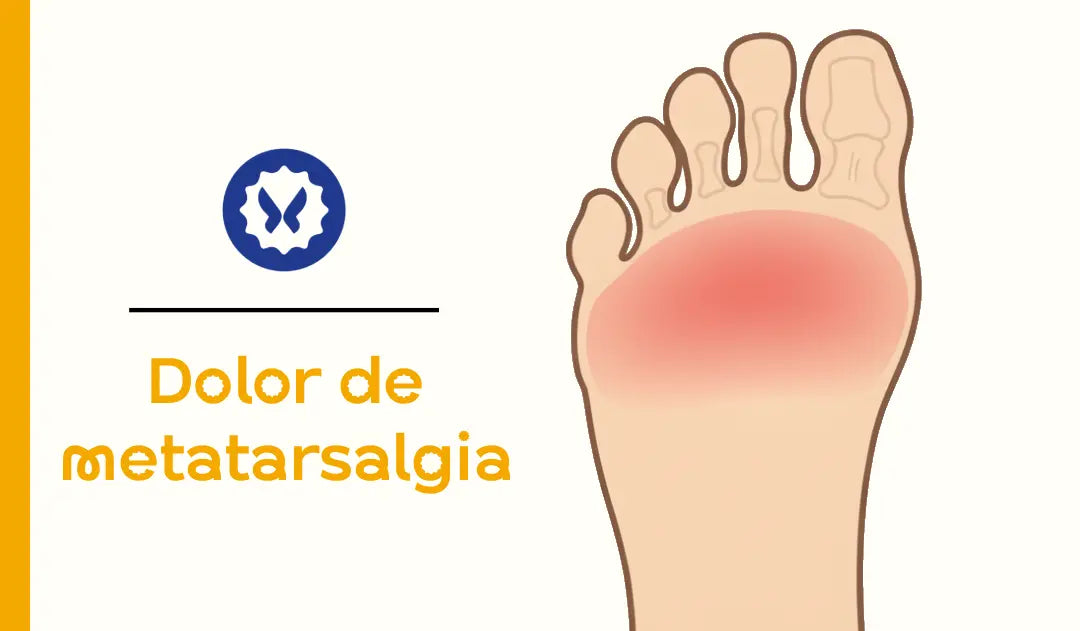
Metatarsalgia is pain in the front of the foot (the forefoot, or "pad" under the toes), usually caused by overload of the metatarsal bones and the tissues around them. It is not usually serious, but it can be very uncomfortable when walking or running. It usually improves with simple measures: rest, ice, changing footwear, wearing the right socks and supports that redistribute pressure. [1]
Symptoms and when to see a professional
Common symptoms
- Sharp, burning or pinpoint pain under one or more metatarsals.
- It gets worse when standing or when pushing off as you walk; it improves with rest.
- It may come with calluses under the metatarsal heads and a feeling of "walking on a stone". [2]
See a professional if the pain stops you doing normal activities, does not improve within about 2 weeks of self-care, gets worse, there is tingling or loss of sensation, or you have diabetes (foot care is a priority). [3]

Causes and risk factors
Metatarsalgia has several causes. The most common are mechanical overload from technique or volume of activity, narrow or high-heeled footwear, foot alignment problems (bunions, claw toes, high-arched or valgus feet), and changes in weight or training surface. [4]
Circulation and forefoot pain: the "end of the day" effect
When circulation slows down, your legs feel heavy and that slight swelling we all notice at the end of the day or on long journeys appears. The result? With every step, you land more heavily and the forefoot (the area under the toes) complains sooner.
What works in practice
- Move little and often: short active breaks to get your legs going again.
- Raise your legs for a few minutes whenever you can.
- Look after your footwear: a wide toe box and good cushioning to spread the pressure.
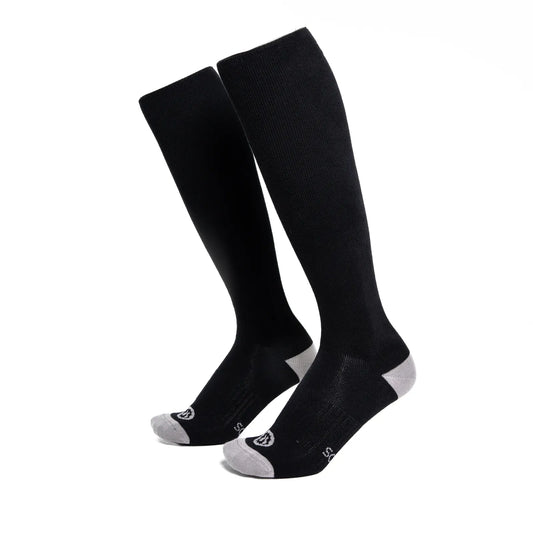
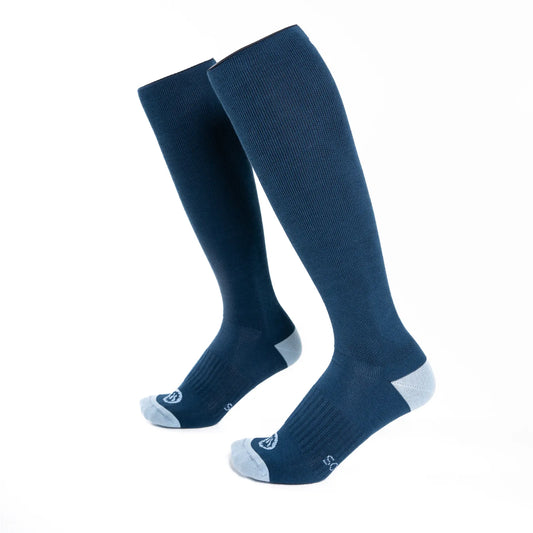
- Use compression (correctly): our 14-17 mmHg compression socks work where they should, on the leg, to support venous return without compressing the foot. That reduces fatigue and helps the forefoot cope better with the day.

Calcetinos options for your day
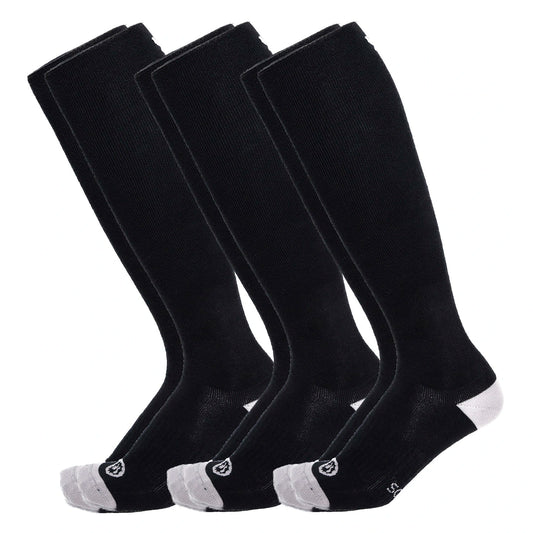
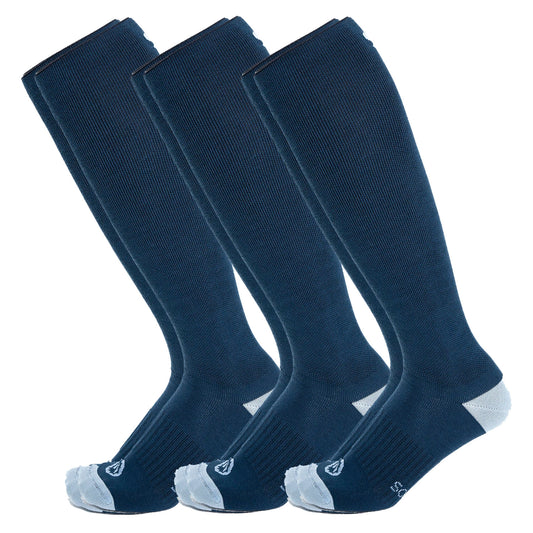
- Calcetinos (all models): wide toe box and zero pressure on the forefoot and toes.
- Calcetinos Dynamic: if you want extra comfort, the cushioned sole is your ally for walking and standing for hours.
- Leg sleeves (footless): ideal when the forefoot is sensitive and you don't want to cover it, but still want the benefits of compression on the leg.
Note: compression does not "cure" metatarsalgia, but it does improve circulation and the feeling of light legs, which helps the forefoot suffer less during the day. If the pain does not improve, see a professional.
(Clinical sources for conservative self-care and metatarsal supports and pads.) [5]
Metatarsalgia vs Morton's neuroma (and other mix-ups)
Metatarsalgia is an umbrella term for forefoot pain caused by overload. Morton's neuroma is a different condition: thickening or irritation of a digital nerve, typically between the 3rd and 4th toes, with burning pain, a feeling of "a marble in your shoe" and sometimes tingling. The two can coexist or be confused. [6]
Historically it has even been called "Morton's metatarsalgia", which explains some of the confusion. Telling it apart from MTP capsulitis, plantar plate injury or bursitis is a job for a clinician, so if it persists, get a professional assessment. While you're here, read our article on Morton's neuroma. [7]
Conservative treatment and self-care
1) Your shoes, your ally
Look for a wide toe box (so your toes can move freely), good cushioning and a sole that absorbs impact. Avoid high heels and lasts that squeeze the toes. If your foot feels squashed at the end of the day, that shoe is not helping.
2) Offload the forefoot (metatarsal pads / insoles)
Metatarsal pads and some insoles spread pressure better. Basic tip: they go slightly behind the painful area, not right on top of it. Start with chemist options and, if you can't find the right spot, ask a podiatrist to adjust them.
3) Ice and "slowing down" during a flare-up
On bad days, apply ice for 10-15 minutes, 2-3 times a day and reduce impact (walk for shorter stretches, vary surfaces). It is relative rest: keep moving, but don't push it.
4) Look after your foot mechanics
A little mobility and strength makes a difference:
- Move your toes (spread and curl, 30-60 s).
- Scrunch a towel with your toes (2-3 sets).
- Stretch your calves and soleus (2 x 30-40 s per leg).
All without sharp pain; if there is any, reduce the range or stop.
5) When to ask for help
If you don't notice any improvement in 2-3 weeks, if the pain gets worse, tingling appears or you have medical conditions that require your feet to be monitored, see a podiatrist or physiotherapist. They can adjust supports, recommend orthotics and, if needed, refer you on.
Calcetinos note: this is general guidance and does not replace a clinical consultation. The idea is to help you move better and with less forefoot discomfort, looking after what is in your hands every day.
How compression socks help without compressing the foot (Calcetinos 14-17 mmHg)
Graduated compression on the leg improves venous return and helps control swelling and fatigue. It does not "cure" metatarsalgia, but it improves walking tolerance and overall comfort, especially on long days or journeys. The evidence supports benefits for oedema and venous haemodynamics with light compression such as 15-20 mmHg (equivalent to our 14-17 mmHg). [14]
The key with Calcetinos is that they put no pressure on the foot (neither the forefoot nor the toes) and all of them have a wide toe box. So they don't aggravate pain from pressure on the forefoot (which can happen with tight socks or shoes).
Dynamic: extra comfort from a cushioned sole
If you want extra cushioning for everyday walking, the Dynamic model has a fully cushioned sole that does not squeeze the forefoot.

Calcetinos Dynamic
14-17 mmHg graduated compression focused on the leg, with no pressure on the foot. Wide toe box and fully cushioned sole for extra comfort on long days.
Buy DynamicCompression leg sleeves (footless)
For flare-ups when you want zero contact with the forefoot and toes, you can wear our leg sleeves: the same 14-17 mmHg graduated compression on the leg only, keeping the circulation benefits without covering the foot (perfect with sandals or toe spacers, or when you use specific insoles or pads).
Tip: combine them with wide-toe footwear and metatarsal pads positioned correctly to offload the forefoot. [15]
Specific problems Calcetinos could solve
- My legs feel heavy and by the end of the day my forefoot is worse.
Light compression on the leg improves venous return and reduces swelling and fatigue, helping you cope better with walking and standing. [16]
- My socks squeeze my toes and it hurts more.
Calcetinos don't compress the foot and have a wide toe box, avoiding the constriction that increases pressure on the metatarsals. (Wide shoes and lasts and metatarsal pads also help.) [17]
- I need extra cushioning without compromising the forefoot.
Dynamic: cushioned sole + no pressure on the foot = comfort when standing and walking for long periods.
- My forefoot is irritated today; I don't want anything touching it.
Calcetinos leg sleeves: compression on the leg only, with zero contact on the forefoot and toes.
- I fly a lot or spend hours sitting or standing.
Light compression (14-17 mmHg) helps with oedema and circulation on journeys and long days. [18]
Also, if you've been told your pain may be related to Morton's neuroma, remember that narrow lasts and pressure between the metatarsals make symptoms worse; read more here about socks for Morton's neuroma. [19]
Frequently asked questions (FAQ)
- Does metatarsalgia go away on its own? It usually improves with conservative management: suitable footwear, metatarsal pads, adjusting your activity load and exercises. If it doesn't settle, get an individual plan from a professional. [20]
- Do I need custom insoles? Not always. Many people improve with well-placed metatarsal pads or off-the-shelf insoles; others need custom insoles after a podiatry assessment. [21]
- Do compression socks relieve forefoot pain? They don't treat the forefoot directly, but compression on the leg helps circulation and oedema, which improves tolerance to standing and walking. Wear them with wide-toe footwear and metatarsal pads. [22]
- How can I tell metatarsalgia from Morton's neuroma? A neuroma usually causes pain between the 3rd and 4th toes, burning and sometimes tingling; metatarsalgia can feel more diffuse across the forefoot due to overload. Read our Morton's neuroma post for details. [23]
- When should I see a doctor? If the pain doesn't improve after 2 weeks, gets worse, there is tingling or you have diabetes. [24]
Disclaimer: this guide is for information only and does not replace an assessment by a healthcare professional.
References
- [1] https://www.mayoclinic.org/diseases-conditions/metatarsalgia/symptoms-causes/syc-20354790
- [2] https://my.clevelandclinic.org/health/diseases/15890-metatarsalgia
- [3] https://www.nhs.uk/symptoms/foot-pain/pain-in-the-ball-of-the-foot/
- [4] https://nhsforthvalley.com/health-services/az-of-services/podiatry/musculoskeletal-podiatry/metatarsalgia/
- [5] https://www.mayoclinic.org/diseases-conditions/metatarsalgia/diagnosis-treatment/drc-20354795
- [6] https://www.mayoclinic.org/diseases-conditions/mortons-neuroma/symptoms-causes/syc-20351935
- [7] https://en.wikipedia.org/wiki/Morton%27s_neuroma
- [8] https://nhsforthvalley.com/health-services/az-of-services/podiatry/musculoskeletal-podiatry/metatarsalgia/
- [9] https://www.mskdorset.nhs.uk/foot-pain/foot-pain-metatarsalgia/
- [10] https://www.mayoclinic.org/diseases-conditions/metatarsalgia/diagnosis-treatment/drc-20354795
- [11] https://orthoinfo.aaos.org/globalassets/pdfs/2017-rehab_foot-and-ankle.pdf
- [12] https://www.esht.nhs.uk/wp-content/uploads/2020/05/0797.pdf
- [13] https://pmc.ncbi.nlm.nih.gov/articles/PMC3110403/
- [14] https://pmc.ncbi.nlm.nih.gov/articles/PMC4081237/
- [15] https://www.mskdorset.nhs.uk/foot-pain/foot-pain-metatarsalgia/
- [16] https://www.health.harvard.edu/blog/compression-stockings-a-foot-dr-explains-201502267742
- [17] https://nhsforthvalley.com/health-services/az-of-services/podiatry/musculoskeletal-podiatry/metatarsalgia/
- [18] https://www.health.harvard.edu/blog/compression-stockings-a-foot-dr-explains-201502267742
- [19] https://www.mayoclinic.org/diseases-conditions/mortons-neuroma/symptoms-causes/syc-20351935
- [20] https://www.mayoclinic.org/diseases-conditions/metatarsalgia/diagnosis-treatment/drc-20354795
- [21] https://www.musculoskeletal.org.uk/a-z/metatarsalgia/
- [22] https://www.health.harvard.edu/blog/compression-stockings-a-foot-dr-explains-201502267742
- [23] https://www.mayoclinic.org/diseases-conditions/mortons-neuroma/symptoms-causes/syc-20351935
- [24] https://www.nhs.uk/symptoms/foot-pain/pain-in-the-ball-of-the-foot/